
Whoa! I’ve been carrying different hardware wallets for years now. They all promised security, but their clunky UX kept me away. At first I trusted mnemonic seed phrases, convinced they were the canonical safety net, but that feeling shifted as I lost devices and contemplated human error, theft, and social engineering attacks. So I started looking for smarter alternatives that felt natural.
Seriously? Contactless hardware cards really caught my eye pretty quickly. They promised tap-and-go payments plus seedless recovery workflows that simplified custody. I dug into architectures, evaluated key storage, and paced through usability tests, and the differences between NFC chips and secure elements suddenly mattered a lot more than the marketing blurbs suggested. There were trade-offs everywhere, though, which made choices hard.
Hmm… Initially I thought cards would be less secure than classic devices. My gut said somethin’ was missing, yet the demos looked slick. Actually, wait—let me rephrase that: the tech was promising, but real-world recovery models and merchant acceptance painted a more nuanced picture that I couldn’t ignore. So I started testing one card across currencies and payment rails.
Wow! Tap-to-pay felt like a natural fit for on-the-go spending. I could see walking into a coffee shop and tapping peace of mind. On one hand, contactless convenience reduces friction and encourages crypto usage, though actually there are technical hurdles—tokenization, NFC standards, and offline security considerations—that vendors must solve carefully. On the other hand, storing multiple private keys for different chains on a single card introduces complexity that must be managed with clear UX and robust cryptography, otherwise users will make mistakes and lose funds.
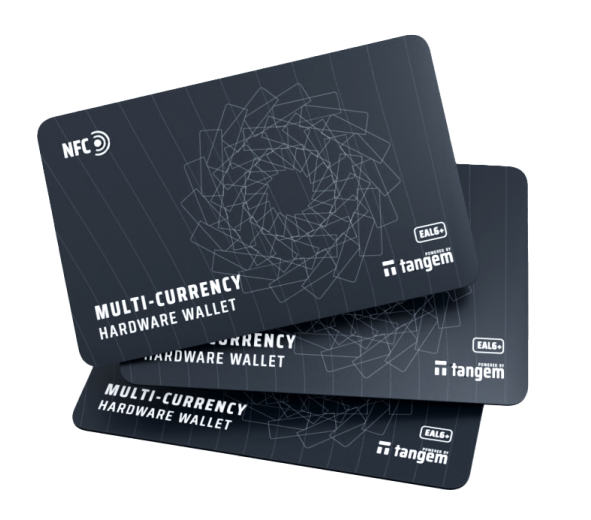
How seedless recovery and multicurrency support change the game
Okay. Check this out—multicurrency support matters more than you think. Most people hold assets across BTC, ETH, and a few stablecoins. A card that stores isolated key slots or uses hierarchical deterministic paths for each chain, while offering a unified UI for sending and receiving, removes cognitive load and reduces cross-chain mistakes that otherwise happen often. That said, the devil’s in firmware updates and recovery design.
I’m biased. I prefer solutions that don’t rely on mnemonic phrases. Seedless recovery models can use secure backups, hardware-backed keys, or social recovery. Initially I worried seedless meant weaker security, but then I saw designs where the wallet generates keys inside the secure element, provides verifiable attestation, and pairs with mobile apps so restoration requires both possession and authorization, which is actually stronger against remote compromises. If you’re exploring options, consider cards tested by independent labs, audited firmware, clear recovery flows, and real merchant integrations—those are the real signals of a product that can be trusted for daily contactless spending and custody.
Okay, so check this—if you want a concrete example of a mature approach, look into tangem and see how some vendors combine secure chips with a tap-to-pay UX. My instinct said the market would be full of vaporware, but tangem’s lineage shows engineering rigor, and that actually matters when your keys are at stake. I’m not 100% sure every feature will fit your needs, though; test the flow, and test recovery, and test again.
FAQ
Are contactless cards as secure as traditional hardware wallets?
Short answer: they can be, depending on design. Longer answer: if a card uses a real secure element with attestation, isolated private key operations, and audited firmware, it can match or exceed many consumer hardware wallets for everyday threats. Still, be careful about backup and recovery models—those are often the weak link.
How do seedless recoveries work?
They vary. Some use encrypted cloud shards, others use delegated recovery via trusted devices, and some combine social recovery with device possession. The important parts are transparency, independent audits, and a restoration flow that requires both something you have and authorization from something else—so a lost card alone can’t drain your funds.